



Access only with guided tour
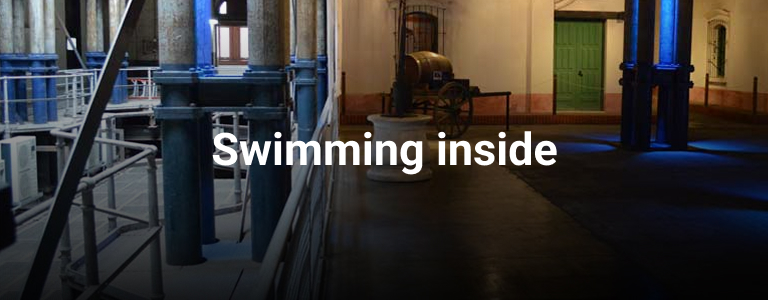
Welcome to the second level. You are now inside one of the twelve water tanks. Notice its size: each tank covers 1,600 square meters and could hold up to 6 million liters of water. Originally, in addition to these twelve tanks, there were two small tanks inside the domes at Córdoba Avenue and Viamonte Street, reserved for extinguishing possible fires in the city.
At first, the tanks were made of iron. However, due to ongoing problems with oxidation and corrosion, in 1939 they were lined with thin brick masonry and coated with waterproof cement plaster, which facilitated cleaning and maintenance.
If you look up, you will see a difference in color near the top of the columns and walls. This mark shows how high the water level reached, which was controlled by a simple float system that prevented overflow.
On the interior walls, you will notice triangular-shaped buttresses. These vertical reinforcements helped stabilize the walls against the strong pressure exerted by the water.
None of the tanks were completely sealed; you will notice an opening running around the upper perimeter of the walls to allow air to escape as water entered.
This Great Reservoir, designed during the Steam Era to supply a city of low-rise buildings (up to two stories) by gravity, began to experience problems with the arrival of electricity and elevators. The urban landscape changed rapidly, and Buenos Aires transformed into a great metropolis. Buildings soon surpassed the height of these water tanks, and the gravity-fed supply system gradually became obsolete.
This building operated at full capacity with all twelve tanks for only twenty years. After that, tanks were taken out of service progressively, from the bottom up, until 1978, when the third level was completely decommissioned.
Since then, the Palace of Running Waters has ceased functioning as a large distribution reservoir and now hosts only administrative, social, and cultural activities.
What you are seeing now is a Sleeping Giant — once the main water supplier for the city.