



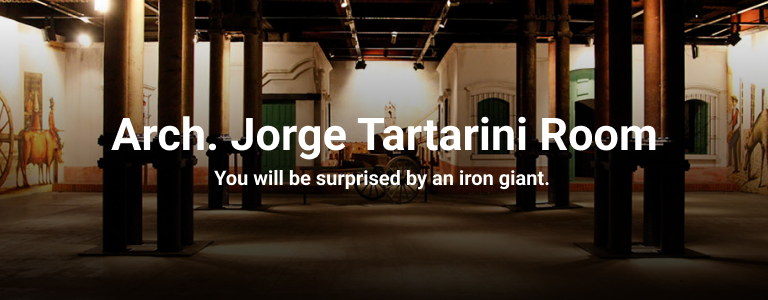


After touring the collections, you'll reach the heart of this Grand Distribution Depot to appreciate how water was delivered, stored, and distributed in iron tanks. You'll also find a representation of a block of colonial Buenos Aires, complete with low adobe houses, narrow sidewalks, water carriers' carts, and cisterns, allowing you to discover the methods and uses of water in that era.
In this space, we host temporary exhibitions, publication presentations, art shows, and other cultural expressions, all of which feature the heritage of water and sanitation projects as their main driving force and common thread.

Architect Jorge Tartarini was one of the founders of the Water Museum and its Director from 1996 to 2019. Through this role, he championed and brought to light the significance of the nation's sanitary history.
An expert in Preservation of Urban Architectural Heritage, with postgraduate qualifications from both Argentina and abroad, he undertook systematic work in research, conservation, and promotion from 1979 onwards, within which the Palace of Flowing Waters held a place of particular importance.
He held various roles within the National Commission for Monuments and Historic Places (Comisión Nacional de Monumentos, Bienes y Lugares Históricos). He also dedicated himself to teaching and left an immense legacy through his numerous publications on the history of architecture and the preservation of Argentine and Latin American cultural heritage.
Our dear architect left his mark—an indelible imprint: his name will forever be inscribed in the History of Water and in this very Museum room that now bears his name.